
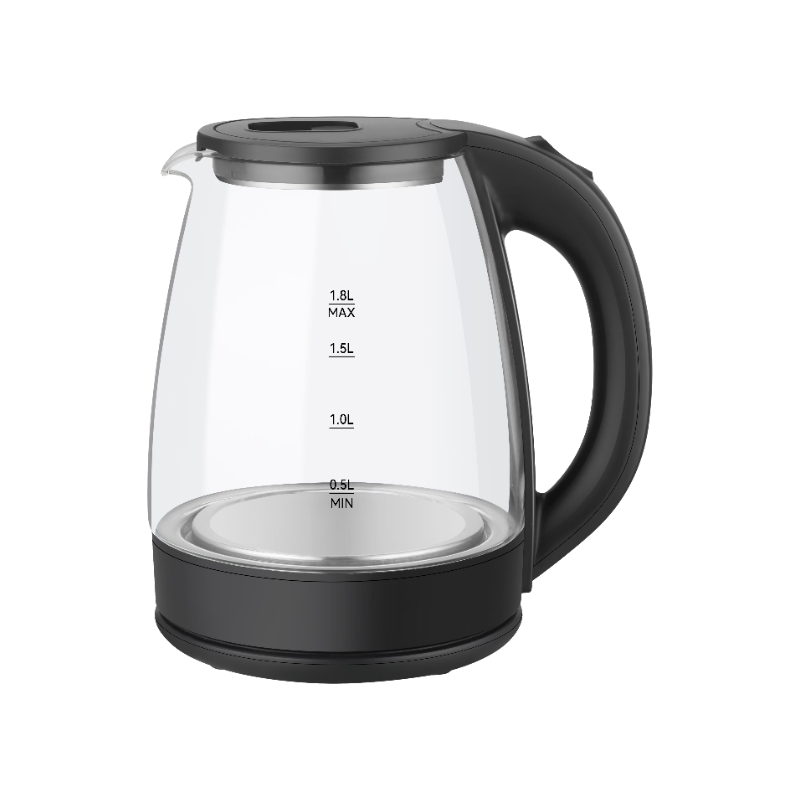
Appliance Configuration FAQ: Platform, Voltage and Tooling
Almost every appliance customization request falls into one of four categories, and the category — not the product — decides how much the project costs and how long it takes. A buyer who knows which category they are asking for gets a realistic schedule; a buyer who asks for everything at once gets an optimistic one.
This FAQ answers the configuration questions that come up most often when adapting small home appliances for a specific market or brand: when to reuse an existing platform, what voltage and plug changes really involve, what can be changed without new tooling, and when packaging should be settled.
Choosing Between an Existing Platform and a New Development
The fastest route to a marketable appliance is usually an existing platform that has already been tested. Adapting a proven kettle, fan or juicer body shortens development, avoids thermal and electrical problems that have already been solved, and preserves the certification basis of the original product where the changes are limited to the housing and branding.
A new development is the right answer when the product has to do something the existing range cannot — a different capacity, a different heating or motor arrangement, a control layout that does not exist yet. It is also the slowest and most expensive route, because the change reaches the moulds and possibly the electronics.
Voltage, Frequency, Plug and Cord
These are specifications, not accessories. The rated voltage and frequency combination is what the heating element or motor is designed around, and the plug and cord set has to meet the destination country's standard. This is why the same product cannot simply be sold into a 110V market and a 220V market as one electrical configuration — the two are supplied as variants of the same platform, as explained in our guide to voltage and plug adaptation for export.
Plug standards are also regulated in some markets, and cord length with them. "The same product with a different plug" is therefore not always a component swap; it can carry a documentation and compliance consequence. The good news is that plugs and cord sets are fitted at assembly, so a single production programme can carry several market variants without new tooling.
What Changes Without New Tooling
Market adaptation and branding sit at the low end of the cost scale, which makes them the sensible first request for a buyer testing a new market:
- Market adaptation — voltage, plug type, frequency, cord length and certification. No tooling impact, and often handled within an existing production run.
- Branding — logo printing, private label, colour and finish. No to low tooling impact; typically a silk screen or a pad plate, which is far cheaper than a mould.
- Packaging — retail box design, inner packing and market-specific documentation. Moderate impact, and the place where hidden costs usually sit.
- Structural and functional change — capacity, controls, internal layout. New moulds and possibly new electronics, and the longest development path.
Customization Categories and Their Impact
| Category | What changes | Tooling impact | Development time |
|---|---|---|---|
| Market adaptation | Voltage, plug type, frequency, cord length, certification | None | Shortest — often within an existing production run |
| Branding | Logo printing, private label, colour, finish | None to low (silk screen or pad plate only) | Short |
| Packaging | Retail box, inner packing, documentation, carton marks | Low to moderate (print and die work) | Moderate |
| Structural and functional | Capacity, controls, internal layout | New moulds, possibly new electronics | Longest — measured in weeks |
The order of that table is the order in which cost and time rise, and it is worth reading a brief against it. A request that mixes a new capacity with a new colour and a new retail box is a structural project with branding attached, and should be scheduled as one.
When Packaging Should Be Decided
Packaging is decided with the configuration, not after it. Three reasons are worth raising early. First, the structure and print specification of a retail box add cost and development time of their own. Second, the packing method determines freight volume, which no negotiation on the unit price can recover. Third, packaging that protects an appliance well in a domestic warehouse may fail in a stacked container, so the carton configuration has to suit the journey and not just the shelf.
Frequently Asked Questions
Can we reuse an existing model and change only the branding?
Yes, and it is the cheapest and quickest customization available. Logo, colour and finish changes typically need only a silk screen or pad plate, which does not affect the mould. Where the changes are limited to the housing and branding, the certification basis of the original product is also preserved.
What can be changed without affecting tooling at all?
Voltage, plug type, frequency, cord length and the certification set for a given market, because these are handled at assembly rather than by the mould. Branding changes are close behind, needing only a print plate. Both are usually possible under existing tooling.
Does cord length really matter?
In some markets it does, along with the plug standard — both are regulated, and the requirement should be confirmed for each destination before production rather than assumed from a previous project. The practical consequence is that the cord set belongs in the configuration document, not in the packing list.
How many market variants can one production programme carry?
Several, and this is what makes a multi-market strategy practical for importers and distributors. The platform stays constant while the electrical configuration, the plug set, the labels and the manual are varied by market. Rather than treating each country as a separate product development, the market list can be defined once and managed as variants of one programme.
How much longer does a new development take than adapting an existing model?
There is no single figure, because it depends on how far the change reaches. Market adaptation is the shortest path and can often run within an existing production run; a structural change is the longest, measured in weeks rather than days, because new moulds and possibly new electronics are involved. What can be said with confidence is that the sequence is the one shown in the table above — market adaptation, branding, packaging, then structure.
Should the retail packaging be decided before or after sampling?
Before. Packaging carries its own print and die work, it changes the freight volume, and its documentation has to be consistent with the configuration that is tested. Deciding it alongside the product means the sample you approve is the product you ship.
Next Step
If you are planning a customized appliance for a specific market, send us the reference product, the destination market with its voltage and plug standard, the category of customization you need and your target volumes. We will tell you which of the four categories your request falls into, what it means for tooling and timing, and what the sample programme looks like.
If your project reaches structural or functional change, the wider picture is covered in our Customization & OEM/ODM section.
Send us your configuration for review.